
By: Lieth Nyak Jock
“The strength of the constitution lies entirely in the determination of each citizen to defend it.” Albert Einstein.
South Sudan's current affairs have been surrounded by dicey controversies and intolerable confusion, which will not only prolong instability but also undermine the multiparty democratic system. On December 22nd, South Sudan’s Minister for Agriculture, Hussein Abdelbagi Akol, announced that he had handed over forces loyal to him to the national army. He claimed that he led a faction of the South Sudan Opposition Alliance (SSOA) and the South Sudan Patriotic Movement (SSPM), and said the step was taken “in the supreme interest” of the country. This move was legally rubbished by SSOA leadership and the South Sudan Patriotic Movement under the leadership of Dr Costello Garang Ring Lual.
The irony on the side of the coin, despite the magnificent explanation from SSOA leadership in Juba, who legally refuted that Hussein had never been the commander-in-chief of umbrella forces. He was dismissed by SSPM on February 20th, 2025, and disowned by SSOA leadership according to reasons known to the umbrella party. In a nutshell, the announcement was welcomed by Information Minister Ateny Wek Ateny, who described it as “a positive and encouraging step” for political stability, according to media reports. That recognition contradicted the implementation process of the agreement and aimed to exacerbate internal divisions among the opposition parties toward a political settlement in the world's youngest nation.
Nevertheless, such a mess caught my attention to air my views about the unfolding political games, which have injured my personal intellect. The games would not only destabilise the opposition democratic process but also instigate a clear political defeat by the ruling party. I risked not pleasing any opposition party in this piece; we must be honest with the South Sudanese if our leaders are expected to lead by example.
On December 17th, South Sudan’s presidency approved an amendment to the 2018 Peace Agreement, removing certain provisions to facilitate an unpredictable general election in December 2026. In that amendment, some opposition parties, including the SPLM-IO alliance, suspended First Vice President Dr Riek Machar, and some civil society organisations expressed doubts about the possibility of the country going for an election.
They argued that “an election proposal was illegal and aimed at excluding key signatories from the 2018 peace deal.” But some opposition bless it without a genuine reason to convince the populace, despite the lack of implementation of security reforms, which was the people’s biggest concern. The stakeholders see that if security arrangements are not implemented, the chance for South Sudan to conduct free, fair, and credible elections is rare. The 2018 Revitalised Peace Agreement was a platform for national transformation to challenge and evaluate ourselves on where we have gone wrong. How can we resolve our social and political differences while hindering our progress? Are we patriotic enough to call a spade a spade so that the country can transit from political wangling?
Opposition parties’ wrangling
The opposition parties' suicide mission surfaced before some people pronounced the Revitalised Peace Agreement dead. The Civil society and regional and international guarantors have been concerned about the snail-pace of the implementation of the agreement, citing a lack of commitment among the peace partners to implement outstanding benchmarks. These benchmarks include security sector reforms and disarmament, effective control over arms and ammunition stockpile and the establishment of a hybrid court, and the action plan for armed forces on conflict-related sexual violence across the country. The analytical observation has drawn stakeholders’ attention.
A satire in tiny lenses, power wrangling, desperation, and passive strategies among the opposition parties have been regrettable and invisible goals that didn’t capture folk's attention. South Sudan Opposition Alliance (SSOA) and SPLM-IO were engulfed by an internal war before the agreement was implemented. Their internal dispute surfaced before they landed in Juba after signing the agreement. Opposition divisions gave the government an upper hand and determined their fate since they could not iron out their internal differences and focused on the reform agenda.
In this scenario, SSOA resorted to two factions last year. The SSOA is led by the Vice President Josephine Lagu. And a breakaway group, which has been dismissed from their parties, the former Vice President Hessen Abdelbagi, who is the current minister of agriculture in the national government, claimed to be their leader. Moreover, SPLM-IO has been a bedrock of internal divisions. Betrayals, ignorance, and nepotism have detrimentally affected their trashed political reform agenda.
Trickeries and a passive approach won over internal fragmentation, persistent poor political strategies, desperation, inability to tackle security arrangements reform, and ethnic alignment, engineering polarisation in the country. Opposition parties splintering along ethnic lines due to power struggles have been more individualistic than a unified national reform agenda. I believe some opposition members would blindly disagree with me in those hilarious submissions as a gorgeous marriage to win the ruling party's trust, without an in-depth understanding of its impact on the system.
Political divorce
Therefore, I talk about opposition parties' sycophantic tone, given the fact that there are other essential approaches oppositions would have used to engage their friends in the agreement. The recent engagements between the opposition parties and SPLM-IG on the virtue of building party consensus were a serious disappointment and worrisome defeat that will paralyse reforms and democratic principles.
Such action will not sharpen the system of governance in South Sudan. It was an empirical test that failed opposition parties. I don’t completely rule out the possibility that the peace partners' internal engagement to discuss some pending benchmarks or developmental programs. They have a constitutional obligation to do so. Thus, it should be done at the level of signatories to the agreement to seek an amicable solution.
Indeed, I was happy when the signatories met on December 12th, 2025, and discussed the status of the revitalised agreement on the resolution of the conflict in South Sudan, R-ARCSS. That was the right platform; it goes well with public domains. The opposition’s action going to the SPLM-IG's secretariat to meet the secretary general was a disgraceful approach, consequently downgrading the opposition's ideological reform agenda.
The horizontal engagement was an absolute slap in the face because such meetings were more about political appointments than finding an amicable solution to address the fragile political landscape. The opposition parties' prostitution was evidence that the SPLM-IG will unceasingly take peace partners for granted. The political manoeuvring has had troubling trends that shadow mischief, ignorance, and failure. They have relegated their constitutional mandates as reformists. Inadequate attention to the implementation of the agreement and an institutional reform in the Transitional Government of National Unity created a huge vacuum, which was threatening the reform process and the system of governance that the South Sudanese needed.
The establishment of the Transitional Government of National Unity was rocked by ceremonial marriages, where optimism and trust-building for smooth implementation of the agreement were lined up as essential components among the signatories before political prostitution eloped their hearts. In such a marriage, the government began testing the opposition parties' brains to see if they adhered to the reform agenda or if their struggle was about positions. The opposition parties’ disgruntled move makes the government capitalise on such weakness.
Why did the opposition lose the journey to the presidency?
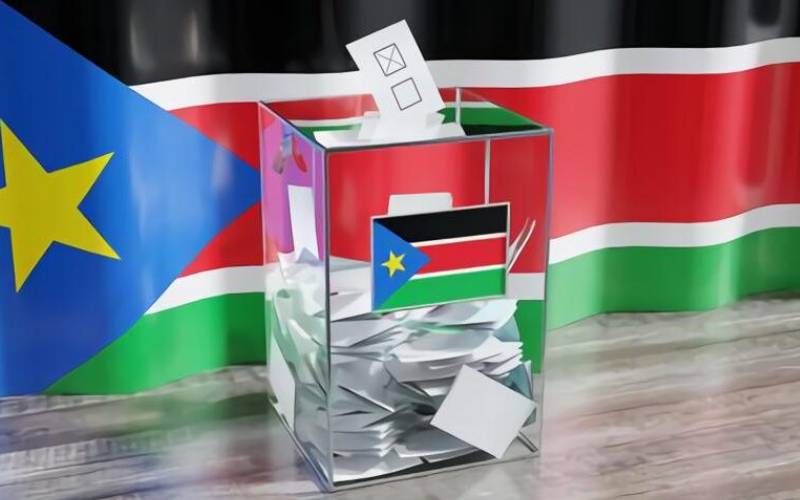
Last week, the Transitional Government of National Unity publicly gazetted the election timeframe for December 2026. The forthcoming election is a chance for South Sudanese, who have been traumatised by wars, to exercise their democratic rights to elect their leaders who will champion the public’s interest rather than politicians’ egos. Although the signatories have gazetted an election timeframe, it remains unpredictable whether the election will happen or not. Why do I say opposition parties lost their journey to the presidency? I know there are many competent leaders among the opposition parties, who I don’t doubt have their intellectual and political capacity to contest for the presidential seat.
Many of them are knowledgeable about the South Sudanese political context and the reforms required. But the question is, are these opposition leaders ready for the election? To me, it is a big no, given the fact that there is a lack of preparedness. The opposition is not ready yet. They aren’t prepared to participate in the general election because they have become toothless and bystanders on their own making. The opposition parties are idlers who are waiting for the SPLM-IG to decide for them. They have forgotten their constitutional mandates within the unity government. Most of them choose to be passive partners without fighting for the public’s interest.
Secondly, financial constraints weakened the opposition group's institutional development, which made them lose sight of their goals. Some who look for survival of the fittest were blinded by the agreement. self-serving notion drowned them from day one. The political vulnerability has grounded them and portrayed the opposition’s flattering style.
I have seen sycophantic manoeuvring and lies in power wrangling among the incompetent elites whose objectives are centred on an unfit individualism without a clear political purpose, leaving behind their academic and military intellects. The concept of a military mindset was said to be that “undermining democracy is not specific to a single country but is observed in nations across the globe where militaries have seized or maintained power through coups, political manipulation, or by resisting civilian control.” South Sudan hasn’t landed in a military coup yet.
The opposition’s inability to focus on a genuine reform process, which was the core objective of the agreement, led to the critical implementation of R-ARCSS. An inability loss of chance for a free, fair, and credible election to be conducted on time. The opposition's political miscalculation of putting their legs on two roads and speaking in a tricky voice that doesn’t reflect their ideologies made them lose the public’s trust. This is the genesis of where drum beating began.
Political reggae must follow reforms and democratic principles. Although the government can be on the wrong side to shoulder such blame, the opposition shadows the SPLM-IG to be in the spotlight. The manoeuvring was characterised by excessive flattery, manifested as a strategy for survival more than the ideologies citizens would like to see. Flattering has become the goons’ daily breakfast and a self-suicide mission, destroying opposition parties’ ideology.